
A Market of Possibilities for 250 Years
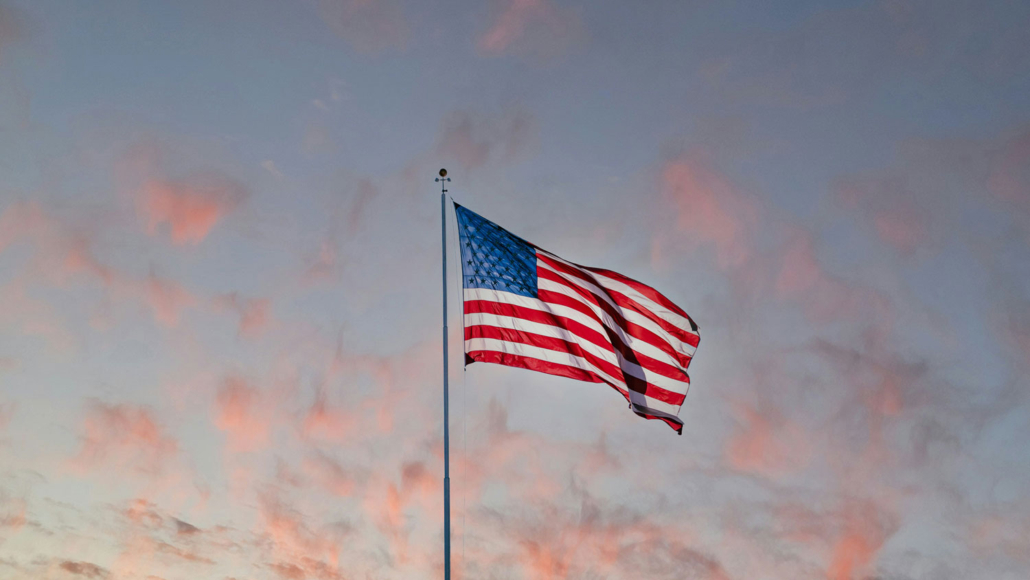
America’s 250th birthday invites reflection — not only on what has happened in the U.S., but on what has been made possible.
We often measure history by wars, presidents, elections and crises. While those events are relevant and notable, another story runs parallel: that of free people asking a simple question on repeat.
What is possible?
That question has consistently shaped this country. America wasn’t founded around a single race, tribe or religion — but on the idea that people, given liberty, agency and opportunity, could pursue better lives and build things the world hadn’t yet seen. That idea has never worked perfectly; our history includes successes and failures aplenty. But the aspiration itself has been remarkable.
What is possible if people are free to think, work, invent, risk, fail and try again?
Doing so requires something important: a financial system capable of supporting businesses big and small. Ideas alone do not build canals, railroads, factories, power grids, automobiles, airplanes, medical laboratories, semiconductor plants or technology companies. Possibility requires capital, trust and a way to make ambition tangible.
That’s where American markets enter the story.
Before Wall Street became a symbol of global finance, it was a lower-Manhattan street with a physical wall built by Dutch settlers in the 1600s to protect against raids. After the British took control in 1664 and dismantled the wall in 1699, the cleared area became the site of early merchant trading — and eventually the New York Stock Exchange (NYSE) in 1792.
The first organized securities exchange in the U.S. wasn’t actually in New York, but in Philadelphia. In 1790, the Philadelphia Board of Brokers formed to help create an organized marketplace for securities in a young nation still trying to establish its financial footing. Then in 1792, twenty-four brokers and merchants in New York signed the two-sentence “Buttonwood Agreement” near 68 Wall Street — aptly named because of the type of tree overhead the signers. This agreement established rules for trading and lay the foundation for the eventual NYSE.
Fun fact: The stock exchange originally used a Chinese gong to start each day of trading. It wasn’t until 1903, when the exchange moved to Wall and Broad Streets, that a bell replaced the gong.
In this modest beginning, a handful of men with a short agreement were attempting to bring order and trust to the buying and selling of securities. Big things often start among small groups.
Early on, markets were mechanisms for funding a new republic, organizing credit, supporting banks, financing commerce and allowing enterprise to grow. Our young country needed roads, canals, ships, factories and institutions — as well as confidence that investors and business owners could participate in something beyond themselves.
Over time, American markets helped turn possibility into production.
The 19th century brought industrial expansion. The 20th century brought electricity, automobiles, aviation, household appliances, medicine, highways, computing and telecommunications. The 21st century has brought smartphones, cloud computing, biotechnology, artificial intelligence, autonomous systems, drones and services we didn’t know we “needed” until they entered our daily lives.
An extraordinary trait of progress is that yesterday’s miracle becomes today’s expectation.
Air conditioning once transformed where and how people could live. Now it’s taken for granted. Automobiles changed mobility, then highways changed the country, then GPS changed how we navigate, and now autonomous driving asks what may be possible next.
The same pattern appears everywhere. We once waited for letters, then phone calls, then emails, then instant messages. We once bought maps, hailed taxis, carried cash, visited banks in person and wondered whether a package would arrive in a week. Now we expect on-demand payment systems, grocery delivery, movie streaming and information download along with ongoing medical advancement.
While some advances are profound, others are, well … ordinary. Visitors often marvel at what many Americans hardly notice: reliable air conditioning, abundant grocery stores, ice in every drink, clean water, endless restaurant choices and, yes, even ranch dressing. We smile because their observations remind us how much we take for granted.
A remarkable country is made possible by a remarkable system.
None of this means America has bypassed hardship. Our markets have endured wars, depressions, panics, assassinations, inflation, recessions, terrorist attacks, pandemics, political turmoil and financial crises. Every generation has had reasons to doubt the future.
Yet beneath the noise, the question kept being asked.
What is possible?
The answer is deeply connected to investing. When you own shares of productive businesses, you’re not merely buying symbols on a screen. You’re participating in human effort, creativity and problem-solving. You’re owning pieces of companies comprised of people trying to serve customers, improve products, reduce costs, expand capacity and create value.
America’s 250-year story is not linear; it doesn’t lack failures, corrections or disappointment. But it is a story of extraordinary creation. From a small group of brokers agreeing on trading rules under a buttonwood tree to a market system that now finances companies reaching into space, decoding disease, automating work, connecting people and improving daily life, the larger arc displays possibility.
For investors, U.S. history offers a useful reminder: We do not invest because the future is certain. We invest because people, given freedom and incentive, have repeatedly found ways to make the future better than today.

Steve Booren is the Owner and Founder of Prosperion Financial Advisors, located in Greenwood Village, Colo. He is the author of Blind Spots: The Mental Mistakes Investors Make and Intelligent Investing: Your Guide to a Growing Retirement Income and a regular columnist in The Denver Post. He was recently named a Barron’s Top Financial Advisor and recognized as a Forbes Top Wealth Advisor in Colorado.