
When the Dollar Buys Less
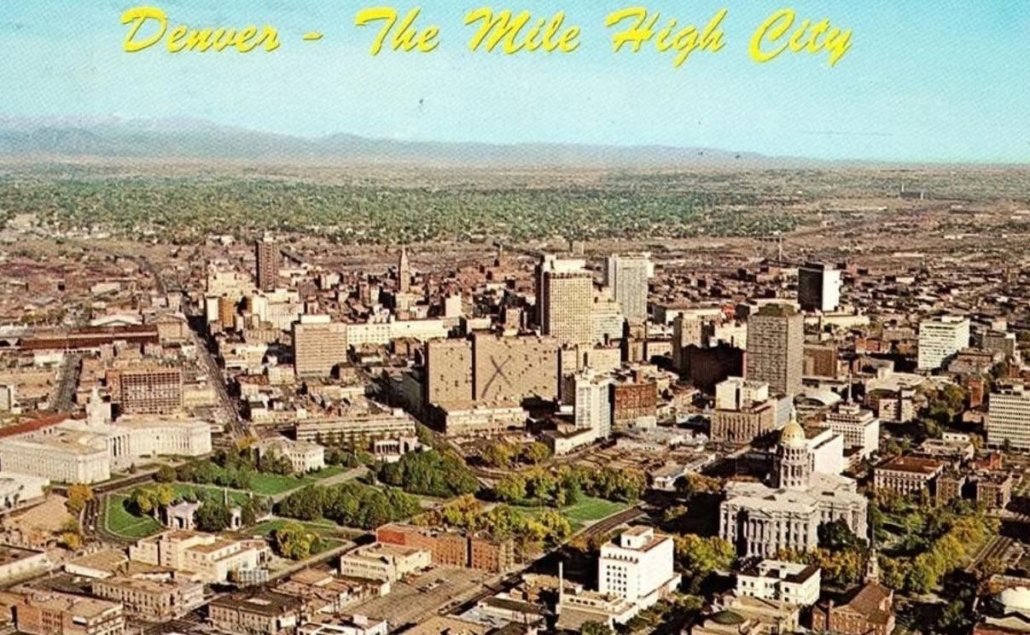
When I started my career in Colorado in 1978, I wasn’t thinking about how different prices would be almost 50 years later.
Back then, gas was less than $1 a gallon. A dozen eggs cost well under a buck. Colorado’s minimum wage was $1.25 an hour. My first home in Centennial cost $62,000, a price that wouldn’t cover most down payments in Front Range neighborhoods today.
Those numbers didn’t seem historically significant then. That’s what’s strange about inflation — it takes time to show its effects. Then one day, you look back and realize just how affordable everything once was.
But was it really affordable? We often see inflation as the rate at which costs go up, which is accurate. But it’s also a measure of how much less each dollar can buy. Over time, your money loses power. The dollar you earned or put in the bank still has the same number printed on it, but it buys much less life.
During my business career I’ve watched this play out in real numbers. Egg prices have quadrupled. Gas is six times higher. Minimum wage went up 12-fold. The used Ford Maverick I drove off a car lot in 1978 for $1,400 has no real equivalent today for under $30,000 (a 21-fold increase). That’s what nearly five decades of inflation looks like in real terms.
Some sectors saw a rapid rise. Others, like technology, actually decreased in price — your dollar buys a much better TV today than in 1978, and the relative value of a smart phone is extraordinary.
That’s why inflation goes beyond just saying, “Everything costs more.” Products and quality improve over time, and competitive markets increase options for consumers. But the lesson remains: A dollar, held over long periods, steadily loses purchasing power.
Housing may be the clearest example from my own life. In 1981, we moved to different home in Centennial — from Eudora Way to South Lima Street — for which we paid $121,000. That property later sold for more than 10 times its original price. In 1994, we bought in Greenwood Village for $600,000. That home, too, is worth several times what we paid.
We didn’t do anything dramatic to increase these homes’ worth. They were simply located in communities where people wanted to live while the dollar quietly lost value around them.
That’s one reason real estate has helped so many families build wealth. A home is tangible and useful, and it often benefits from the long-term decline in purchasing power. A home provides shelter while also allowing the owner to participate in appreciation over time.
The same principle applies to owning shares of productive businesses. Those businesses aren’t just symbols on a screen. They sell products and services, employ people, solve problems, earn profits, reinvest in growth, and in many cases share a portion of those profits with their owners. Over long periods, those businesses’ value can outpace the relative loss in purchasing power of cash.
That’s the race investors are really running. It won’t be decided by today’s headline, this week’s inflation report or the next Federal Reserve decision. The real race is between purchasing power and the rising cost of life over decades.
This is where cash can deceive us. It feels safe because a dollar in the bank today still looks like a dollar tomorrow, and the balance may appear stable on a statement. But over long periods, its purchase power is decreasing. That loss shows up in the grocery bill, car repair expense, home insurance renewal, tuition bill, property tax notice and restaurant check.
Investing, by contrast, requires accepting visible uncertainty in pursuit of long-term purchasing power. Markets can decline, businesses can disappoint and bubbles can form. That’s the risk of participation.
But the alternative is not risk-free. Holding too much money in cash for too long nearly guarantees that inflation will reduce what those dollars can do for you.
That’s why we have long emphasized owning productive, growing assets. That often includes high-quality businesses that can grow earnings and, when appropriate, increase dividends over time. Dividend growth is not magic. It’s simply one way successful businesses convert rising profits into rising income for their owners.
This is why I’m less interested in arguing about whether prices will rise faster or slower next month. They will do what they do. Policymakers will respond as they respond. Markets will react, overreact and eventually focus on something else.
The better question for families is more personal: Is my money positioned in a way that can defend my purchasing power over time?
Everyone has their own inflation rate. A young family with children, a retiree with healthcare expenses, a homeowner with rising insurance premiums and a student paying tuition all experience inflation differently. My examples come from my own life in Colorado, but the lesson applies broadly: Prices change. Decades pass. And your dollar buys less.
A good financial plan should recognize that reality without inciting fear. Keep enough liquid cash for emergencies and near-term needs, but don’t mistake cash savings for a long-term inflation strategy. Over time, your money must own something capable of growing.
The purpose of investing is not merely to have more dollars someday. It’s to preserve and increase what your dollars can do.

Steve Booren is the Owner and Founder of Prosperion Financial Advisors, located in Greenwood Village, Colo. He is the author of Blind Spots: The Mental Mistakes Investors Make and Intelligent Investing: Your Guide to a Growing Retirement Income and a regular columnist in The Denver Post. He was recently named a Barron’s Top Financial Advisor and recognized as a Forbes Top Wealth Advisor in Colorado.